The race for an open Senate seat in Ohio could decide the future of the CLARITY Act, a crypto-friendly bill that has been in development since last year, according to Galaxy Digital’s Alex Thorn. The contest is very close, with Republican Senator Jon Husted likely to face former Democratic Senator Sherrod Brown, who is expected to win his party’s nomination. If the Democrats win, the CLARITY Act will likely have a much harder time passing.
Why is Sherrod Brown bad for the CLARITY Act?
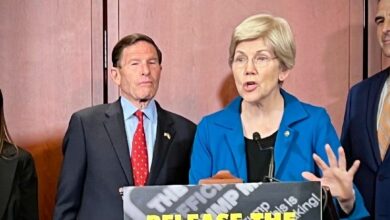
According to Galaxy Digital’s Alex Thorn, if Democrats take control of the Senate and Brown wins in Ohio, he could become the chairman of the Banking Committee again, a role he held from 2021 to 2025. If Democrats win but Brown loses, Senator Elizabeth Warren would be next in line. Thorn sees both options as bad for digital asset laws. Brown got an “F” rating from Stand With Crypto, which says he is “strongly against crypto” based on 17 public statements and his vote against the SAB 121 resolution in May 2024.
As banking chairman under President Biden, Brown blocked bills supported by the crypto industry. Senator Tim Scott, who replaced him as committee head, thanked the crypto industry for helping to remove Brown from office.
How did crypto groups help defeat Senator Brown?
Pro-crypto groups spent more than $40 million to unseat Brown in 2024, over four times what they spent on any other Senate race that year. It worked. Brown narrowly lost to Republican Bernie Moreno, 46% to 50%. But elections come back around, and so has Brown. This time, he has a financial advantage. He raised $10.1 million in the first three months of 2026, compared to Husted’s $2.9 million, and has $16.5 million cash on hand versus Husted’s $8.2 million.
The top Republican super PAC has committed $79 million to defend the seat. The crypto industry is mobilizing again. The Sentinel Action Fund super PAC has already spent $8 million opposing Brown. Fairshake, which led the 2024 campaign against him, had over $170 million in cash as of February. Coinbase CEO Brian Armstrong told reporters, “We saw what happened in the last administration. We’re never gonna let that happen again.”
What is Brown’s current stance on crypto?
Since leaving the Senate, Brown has softened his tone but has not shared new policy ideas. His campaign told reporters last August that he “recognizes that cryptocurrency is a part of America’s economy” and would work to make sure it “expands opportunity and lifts up Ohioans.” In April, his campaign repeated the same points when asked if his views had changed. Husted, who was appointed to fill JD Vance’s seat, has positioned himself as pro-crypto. Contributions from executives at Andreessen Horowitz, Solana Labs, and others totaling $49,000 have gone to his campaign.
The clock on CLARITY
Senior Trump administration officials have urged Congress to pass the CLARITY Act to create a broader regulatory framework for digital assets, building on the GENIUS Act stablecoin law from last year. But time may be running out. Ohio’s primary is on Tuesday, May 6, and sets the stage for a November special election that could decide the Banking Committee’s leadership and the future of crypto regulation. Cook Political Report calls the Ohio race a toss-up, along with contests in Maine and Michigan. Democrats need to flip only a few seats to win back the majority, and every close race tightens the margin that crypto lobbyists are counting on to pass legislation before the current Congress ends.
FAQs
- What is the CLARITY Act?
The CLARITY Act is a crypto-friendly bill that aims to create clear rules for digital assets in the United States. Its future depends on who wins the Ohio Senate race. - Why is Sherrod Brown seen as bad for crypto?
Brown has an “F” rating from Stand With Crypto and blocked crypto-friendly bills when he was banking chairman. He is considered strongly against the industry. - How much money is being spent on this race?
Pro-crypto groups spent over $40 million against Brown in 2024. Now, the top Republican super PAC has committed $79 million, and crypto groups are spending millions more to stop him again.